Health Living Journal
Independent Health Reporting
Foot Health
The Hidden Problem Behind Chronic Heel Pain That Most Treatments Ignore

By Jennifer King
June 2026 · 8 min read

If you've been dealing with this foot condition for more than a month, and icing, stretching, and orthotics aren't working anymore, there's a specific reason why. And it isn't what most people, or many doctors, are telling you.
The condition you're treating today is not the same condition you had four weeks ago. The pain feels the same. The diagnosis hasn't changed. But underneath, changes deep inside the tissue in your foot transformed it into an entirely different problem even though you haven't realized it. And almost no one explains this change.
To understand it, let's look at three of the most-watched cases of chronic heel pain on record.
Albert Pujols, considered one of the most dominant hitters in baseball history, played through chronic heel pain for nearly a decade. Then, in 2013, his left foot tissue ruptured during a game, which was widely reported at the time. Peyton Manning dealt with chronic heel pain throughout his career, with documented concerns at multiple points. Tim Duncan, a Hall-of-Fame NBA legend, contended with chronic foot pain through his final seasons.
These men had access to the best sports medicine on the planet. And still, foot pain followed them through their careers.
That isn't because they did anything wrong. It's because almost everyone, patients and coaches and a lot of doctors, treat this foot condition like the wrong condition.
Here's what's really going on.
2 Phases of Chronic Heel Pain: Inflammation and Degeneration
This isn't meant to scare you. The opposite, actually. Most people leave the doctor's office thinking chronic heel pain is a vague, "you'll just have to manage it" condition. It isn't. It's a specific tissue problem stemming from a specific underlying mechanism, and once you understand it, the path forward gets simpler.
There's a common misconception that steers so many patients in the wrong direction.
Chronic heel pain is often thought of mainly as an inflammation problem. That's why the standard first-line approach involves anti-inflammatories, ice, and stretching. And for the first four weeks after the pain starts, that's correct. Early on, the problem is inflammation. Anti-inflammatories, ice, and rest all help.
If you're inside that four-week window, most practitioners give simple, non-product advice: rest the foot as much as you reasonably can, ice for 15 to 20 minutes a few times a day, and take anti-inflammatories as directed by your doctor. Most acute foot discomfort responds well to that approach.
That all changes once you've had chronic heel pain for more than four weeks. According to a study published in the Physical Medicine and Rehabilitation journal, at that point, the condition itself transforms. The inflammation fades, and what takes its place is a completely different problem: degeneration. A separate, often-cited 2003 study took biopsies from 50 chronic cases and found inflammation in zero of them. All 50 showed degeneration instead.

The thick band of tissue running from heel to toes is where both phases of this condition take hold.
Self-Check: Are You Still in the Inflammation Phase?
Answer the following questions about your experience with chronic heel pain.

Have you had heel pain for longer than four weeks?
Did ice stop giving you relief, when it used to help?
Is the pain sharpest with your first few steps in the morning before settling into a duller ache as the day goes on?
If you answered "yes" to one or more, you've likely already crossed into the degeneration phase. That's why whatever helped ease your pain early on stopped working. Keep reading to find out how to shift your approach to match the phase of the condition you're actually in.
The 4-Week Pivot Most People Never Hear About
Your foot's support tissue is the thick band of tissue connecting your heel to your toes. Think of it like a rubber band stretched across the bottom of your foot. When it gets stressed, tiny tears form, like a rubber band that's been stretched too many times. It gets weaker, more brittle, until it starts to crack.
Here's another biological fact that explains everything. Your foot's support tissue barely gets any blood flow, even when it's healthy. It's one of the most blood-starved tissues in your entire body. And once your tissue starts breaking down, blood flow to it drops even further.
Blood is what carries oxygen and nutrients your body uses to repair damaged tissue. Without it, the tissue stays weak. The tissue tears more easily and every step you take creates more micro-tears. Blood flow drops even further. Researchers call this the "degenerative spiral."

A closer look at what's happening inside: micro-tears accumulate in the foot tissues, starving the tissue of the blood flow it needs to repair.
The "Degenerative Spiral" of Chronic Heel Pain—and How to Break It
If chronic heel pain keeps going unchecked, it doesn't stay in your feet.
Research shows unaddressed chronic heel pain leads to compensatory gait changes. In other words, you start walking differently to avoid the pain, which puts stress on your knees, your hips, and your lower back. As the tissue continues to change, heel spurs and sharp calcium deposits in the fatty pad of the heel can form. In severe cases, the tissue can rupture completely, which is exactly what happened to Pujols in 2013.
But with the right approach, you can disrupt the cycle. Your body wants to improve. In fact, it's designed to support itself. It just needs two things it hasn't been getting:

Blood flow to rebuild the damaged tissue in your foot.

Support to stop the tearing that compounds the concern with every step.
Give it those two things and your body can do what it does naturally, and start to feel better.

Before and after: without proper support, tissue stays starved and damaged (left). With the right intervention, the tissue gets the blood flow and rest it needs to recover (right).
Why Stretches, Ice, Insoles, and Other Approaches Stopped Helping
This also explains why everything you've tried so far hasn't worked. Not because you did anything wrong, but because those approaches were built for inflammation, not tissue degeneration. Here's a quick rundown of common approaches and why they fall short after week four.

Stretches: Stretching targets inflammation, but after the first few weeks of chronic heel pain, you don't have inflammation anymore. You have tissue degeneration. Worse, stretching pulls on tissue that's already damaged, creating more micro-tears.
Ice: Same here. Icing calms inflammation, but if your foot is no longer inflamed, it doesn't help.
Anti-inflammatories: Ibuprofen and other OTC anti-inflammatories are great for taming inflammation, but once you're out of that phase, they're not helpful.
Night splints and foot rollers: Both feel good momentarily, but they don't restore blood flow and don't stop your foot tissue from tearing.
Generic insoles: Insoles cushion your heel, but they don't do anything for the tissue underneath. And if their support sits in the wrong place, they might press on the parts of the tissue that are already breaking down, making things worse.
None of these address the underlying cause of your pain. That's not your fault. It's just that most of the solutions on the market were built around an outdated understanding of what chronic heel pain actually is.
The real issue is mechanical. Your tissue is degenerating because blood flow has dropped, and it keeps tearing every time you take a step. And if you're like most people, you take thousands of steps every day. So the question is: how can you restore blood flow to your foot's tissue and properly support the foot to help prevent damaged tissue from further re-tearing?
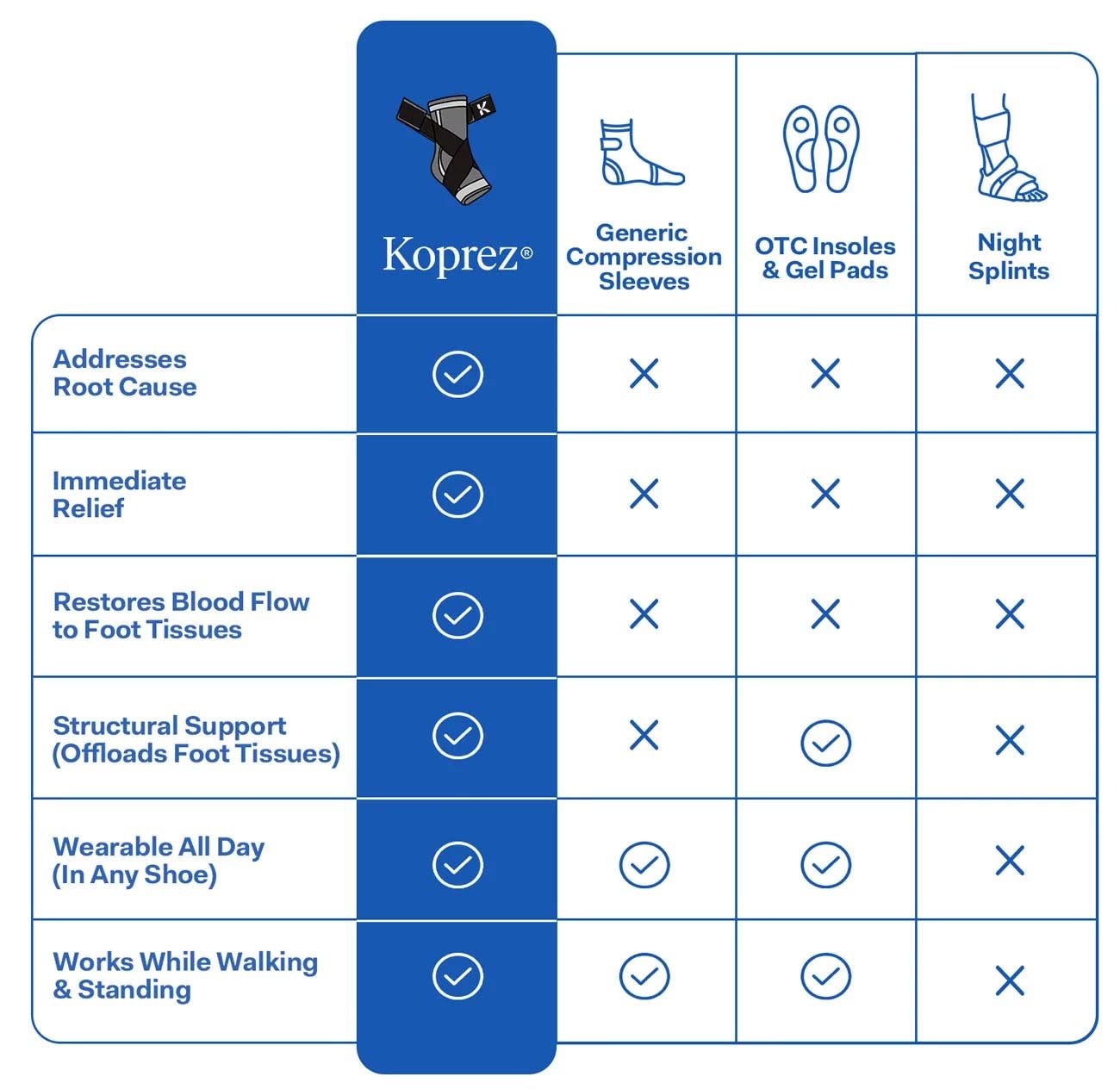
How Koprez compares to every other treatment most people try — only one addresses the root cause, restores blood flow, and provides structural support.
A Specialist's Mission: Address Chronic Heel Pain for What It Is
That's the exact question physical therapist named Anabelen Aranton set out to answer.
Aranton spent over 20 years working with chronic heel pain patients in her practice. The pattern she saw, again and again, was the same one described above.

"By the time most patients walked through my door, they'd already tried everything that's designed for the first four weeks," she says. "The window had passed, and nobody had told them the problem had changed."
— Anabelen "Annie" Aranton, Licensed Physical Therapist
The project that produced the foot sleeve Aranton eventually built didn't start from a strictly professional motivation. She'd watched her own mother struggle with chronic heel pain for years, hobbling out of bed every morning, giving up her daily walks, losing her independence piece by piece.
Aranton's mother had tried everything she'd been trained to recommend. Stretching. Insoles. Ice. Nothing gave her mother lasting comfort.
So she designed something new. Not another general-purpose foot device, but a sleeve designed specifically around the two things degenerated tissue needs: blood flow, and load-bearing support that lets the tissue rest.
That sleeve is the Koprez Foot Sleeve.
How It Works: One Sleeve, Two Support Mechanisms
The Koprez sleeve is built around two engineered components, each designed to address one specific half of the degeneration problem.
The Koprez Sleeve's dual-strap system actively compresses the foot tissues while restoring circulation — the two mechanisms chronic foot pain treatments miss.

Biolateral Circular Compression: Most compression sleeves squeeze your foot with generic, uniform pressure. Koprez uses a multi-directional compression system designed to drive fresh, oxygenated blood deep into the foot's tissue, helping deliver the oxygen and nutrients the tissue needs to rebuild.
Polyaxial Support Straps: Your foot's support tissue normally supports your foot by pulling in multiple directions, like cables on a suspension bridge. When those cables are damaged, every step pulls on those damaged areas and tears them further. These straps are designed to take over part of that job, carrying part of your body weight so your tissue can finally rest.
So you get both at once. Blood flow helps rebuild and support stops the tearing. With both mechanisms working together, the cycle that drove the damage can begin to quiet down.
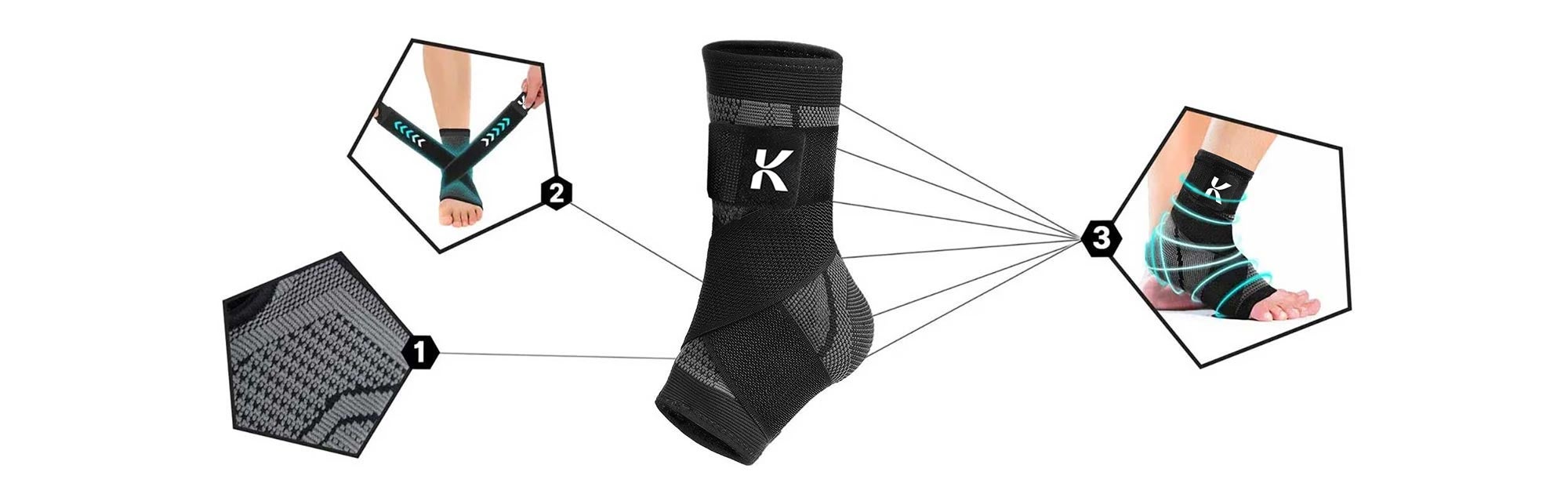
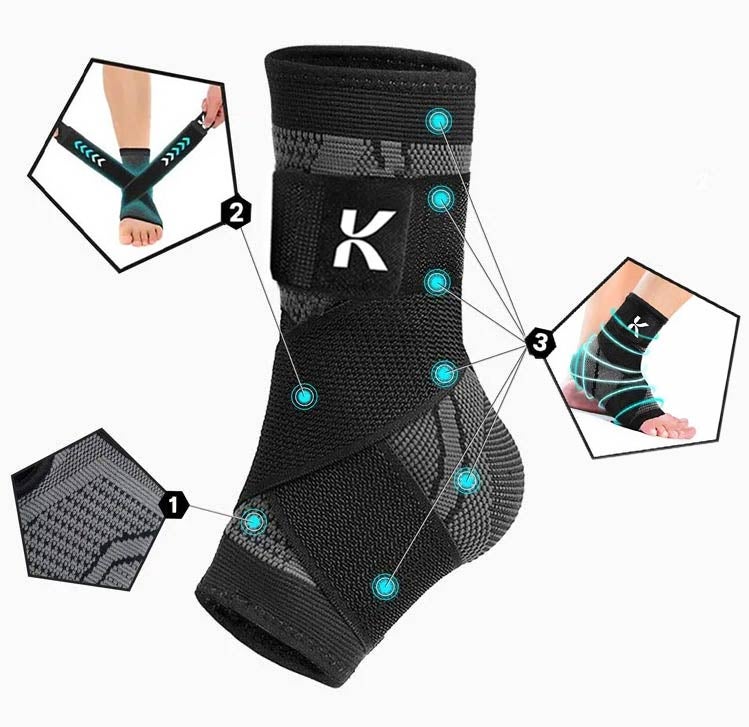

Premium Compression Fabric
More flexible than standard materials.
More breathable than traditional supports. Machine washable for your convenience

Polyaxial Support Structure
Our proprietary design helps distribute pressure evenly and supports natural foot movement for enhanced comfort and stability.

Biolateral Compression Zones
Six targeted compression zones work in harmony to maximize comfort and deliver support precisely where it's needed most.
Three layers engineered to work together — Premium Compression Fabric, Polyaxial Support Structure, and six Biolateral Compression Zones — each targeting a specific part of the degeneration problem.
Koprez sleeves are also extremely thin. They fit comfortably under any sock, inside any shoe. Many users wear them to work, around the house, and overnight, and most say they forget they're on within a few minutes.
If you've already crossed past the four-week window, this is the device Aranton designed for the stage of chronic heel pain you're actually in. The product page dives deeper into the engineering, materials, and fit.
What to Expect: Day 1 to Month 1
Here's what the typical experience looks like for users who wear the sleeves consistently.
DAY 1
You slip on the sleeves and feel the support immediately. You might feel that constant ache ease up within minutes.
WEEK 1
Mornings start to feel different. That stabbing sensation with your first steps out of bed begins to soften. Many users report that, within a week, they no longer have to brace themselves on the wall to walk to the bathroom or kitchen.
WEEK 2
The sharp pain becomes a dull ache, and then fades further. You might find it easier to stand for longer periods of time or walk further without an issue.
WEEK 3
At this point, many users say they realize they haven't thought about their feet in days. They're walking through stores without leaning on carts. They're saying yes to plans they would have turned down a month ago.
MONTH 1
For many users, the pain lessens significantly, their feet have finally had the chance to rest and support themselves. They start getting back to the life they'd been putting on hold.
Results may vary.
The longer you wear the sleeves, the more support the tissue gets. And it's worth knowing: chronic heel pain has one of the highest recurrence rates of any foot condition. That's why many users keep wearing Koprez sleeves on demanding days, long work shifts, while traveling, and during workouts, to keep the support consistent.
What Users Are Saying

★★★★★
Retired basketball player
Michael S., 58
"I've tried everything. Custom orthotics. Stretching. Night splints. Nothing worked. Within two weeks of wearing these sleeves, I woke up without pain for the first time in over a year. I just stood there for a second. I couldn't believe it."

★★★★★
Tennis Player
Michelle T., 55
"I've been playing tennis since I was 12. I used to play every day until one day I woke up with stabbing pain in my heel. I'm not ready to quit playing. That's why I'm glad I found these sleeves. Now I wear my Koprez sleeves every game and I don't even worry about my feet anymore."

★★★★★
Football Coach
Wade C., 40
"2 weeks. I know it's hard to believe. I wore a pair of Koprez for 2 weeks to see if it would help with my chronic heel pain. It's already been 3 months, we're now playing in finals, and I haven't missed a single practice since."

★★★★★
Fitness Instructor
Ruth J., 46
"I was very skeptical. I've wasted so much money on things that didn't work. But this was different. The pain I've had for years is almost completely gone. I'm ordering a second pair."
To date, more than 300,000 people have worn the Koprez Sleeve. Right now, Koprez is running a special promotion: Buy 1, get 1 free.

That's worth knowing, because chronic heel pain recovery depends on consistent daily wear. You wouldn't get by with one pair of socks—when one pair's in the wash, you want another ready to go. Same here.
The total for the pair is also far less than what most people spend on doctor visits, injections, custom orthotics, physical therapy, and the running list of products that don't address what's really going on in your foot: degeneration.
There's also a 30-day money-back guarantee, so there's no reason not to give it a try. Koprez is a small company, and because of the specialized compression technology, they can only produce a limited number of sleeves per month. Every time they run the Buy 1 Get 1 Free offer,
it's historically sold out within days.
Your feet have already carried you this far.
SOURCES
Lemont H, Ammirati KM, Usen N. Journal of the American Podiatric Medical Association. 2003;93(3):234–237.
Wearing SC, Smeathers JE, Urry SR, Hennig EM, Hills AP. Sports Medicine. 2006;36(7):585–611.
Buchbinder R. New England Journal of Medicine. 2004;350(21):2159–2166.
Goff JD, Crawford R. American Family Physician. 2011;84(6):676–682.
Riddle DL, Pulisic M, Pidcoe P, Johnson RE. Journal of Bone and Joint Surgery. 2003;85-A(5):872–877.
This is a marketing piece. The story above is illustrative and reflects one person's experience; it is not a promise of typical results. Koprez sleeves are intended for everyday comfort and support and are not intended to diagnose, treat, cure, or prevent any condition. Individual results vary. Testimonials are from real customers and are not a guarantee you'll experience the same. For any health concern, talk with a qualified professional about what's right for you.
© 2026 All Rights Reserved.